Florida
The Sunshine State
Quick Stats
Map
Seal & Motto
"In God We Trust"
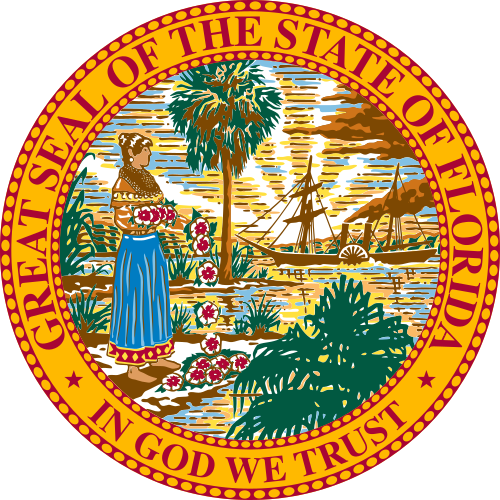
The official motto of the United States, adopted by Florida in 1868 as part of its post-Civil War reconstruction. The seal depicts a Seminole woman scattering flowers, a steamboat, and a Sabal palm beneath a radiant sun.
Flag Meaning
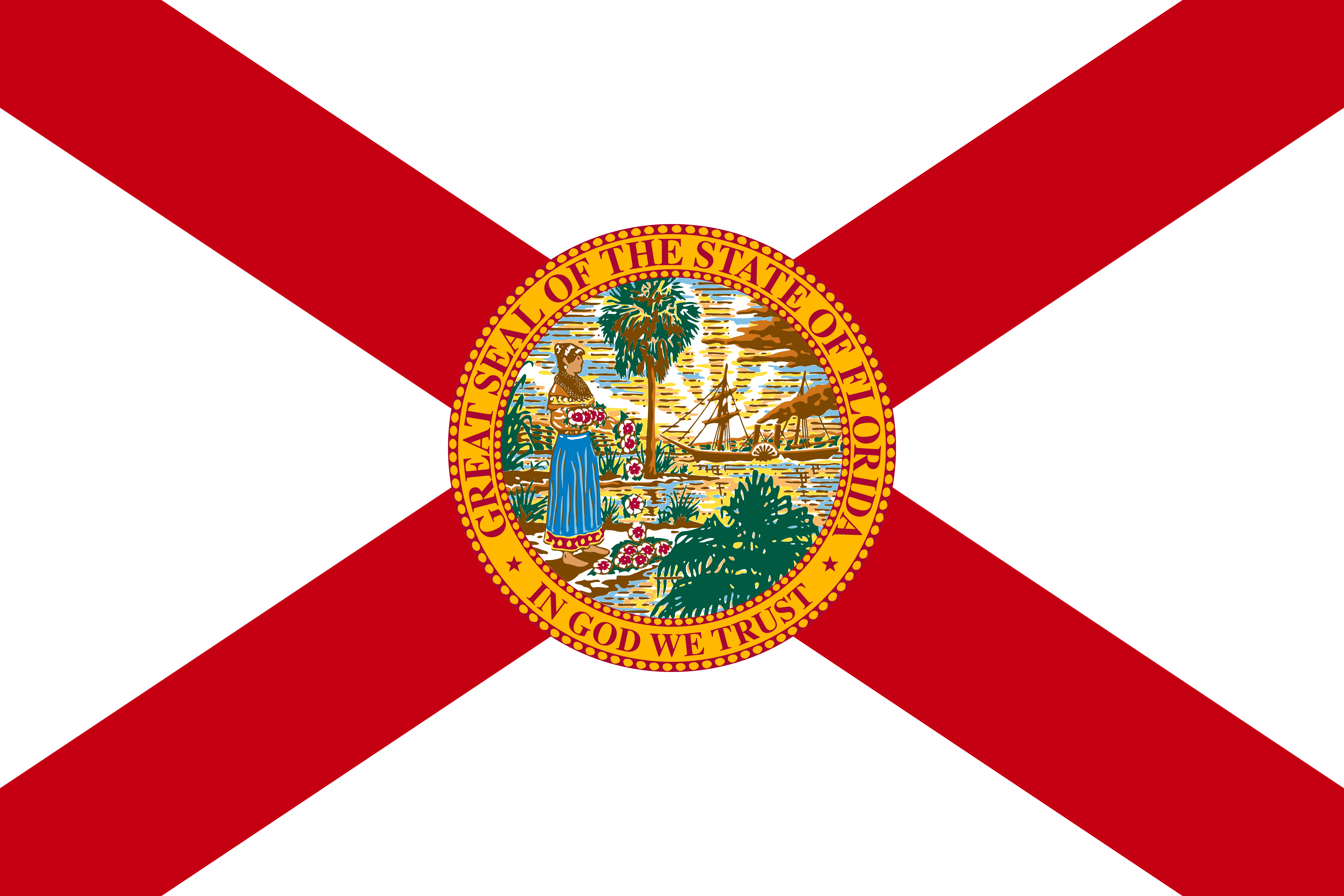
Florida's flag features a red saltire (diagonal cross) on a white field with the state seal at the center. The current design was adopted in 1900, with the seal updated in 1985.
- Red Saltire (St. Andrew's Cross) — added in 1900 to ensure the flag wouldn't resemble a white flag of surrender when hanging limp on its pole.
- White Field — represents purity and the clean sand beaches that define much of Florida's 1,350-mile coastline.
- Sabal Palm — the state tree, featured prominently in the seal, symbolizing Florida's lush tropical landscape.
- Radiant Sun — represents Florida's famous sunshine and its nickname as the "Sunshine State."
State Symbols
Overview
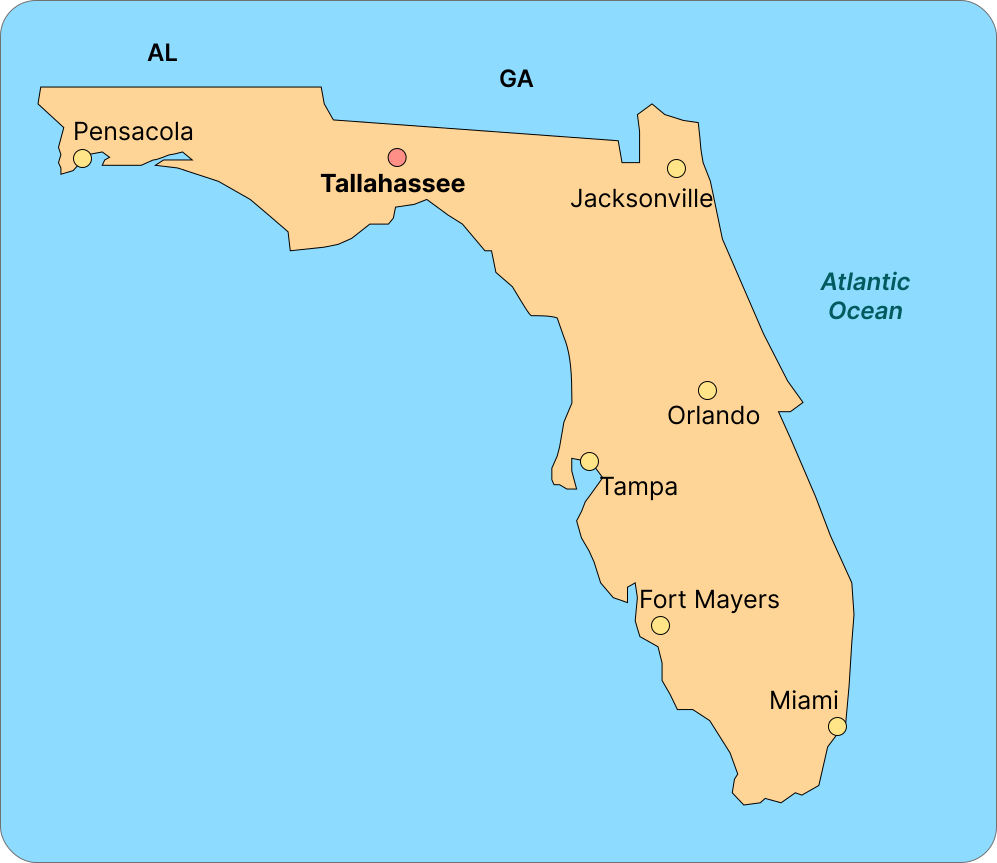
Florida is a unique peninsula located in the southeasternmost part of the United States. Known globally for its tropical climate and over 1,350 miles of coastline, it serves as a major hub for tourism, international trade, and space exploration. The state's diverse geography ranges from the subtropical Everglades in the south to the white-sand beaches of the Panhandle in the north.
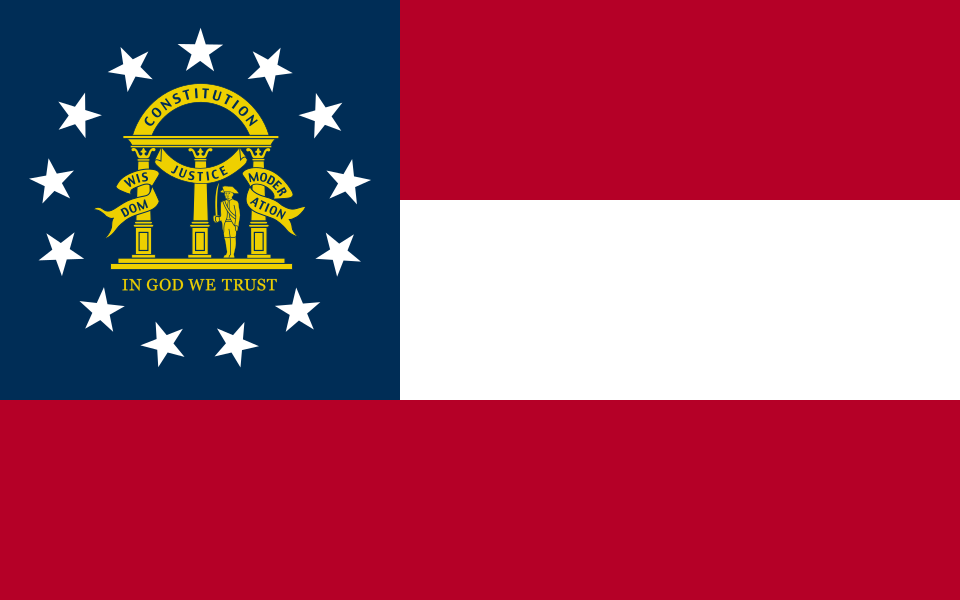
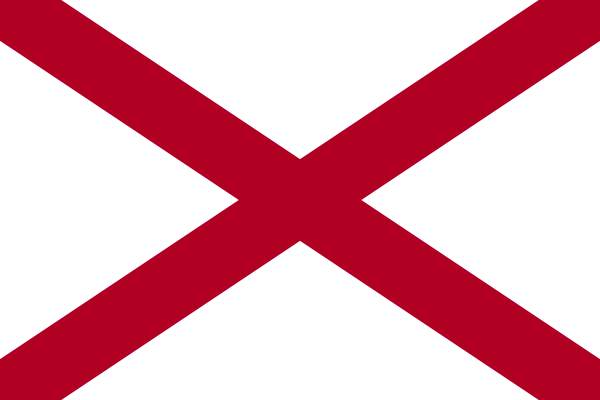
Geographically, it shares borders with Georgia and Alabama, forming a closely connected regional network.
Historical Significance
Founded as a Spanish colony in 1513 by Juan Ponce de León, Florida has a long and complex history. Florida officially joined the Union on March 3, 1845, as the 27th state. St. Augustine, located on the northeast coast, holds the title of the oldest continuously inhabited European-established settlement in the contiguous United States, founded in 1565.
Famous Natives
Top Cities & Hubs
Jacksonville
Population: ~971,000The largest city by area in the contiguous US. A major deepwater port and financial center.
Miami
Population: ~450,000A major center for finance, commerce, culture, media, entertainment, the arts, and international trade.
Tampa
Population: ~398,000Located on the Gulf Coast, known for its museums and cultural offerings. An economic center of Western Florida.
Orlando
Population: ~316,000The "Theme Park Capital of the World," home to Walt Disney World, Universal Studios, and EPCOT.
St. Petersburg
Population: ~261,000Part of the Tampa Bay area, known for its pleasant weather and the world-renowned Salvador Dalí Museum.
How Florida Ranks
Compared to all 50 states — bar shows relative standing (#1 = full bar)
Additional Information
32003 (Fleming Island) → 34997 (Stuart)
~1,007 ZIP codes statewide
Key Landmarks & Economy
Did You Know?
- Florida is the only place on Earth where alligators and crocodiles coexist in the wild.
- The state produces about 70% of the United States' citrus fruit supply.
- No matter where you are in Florida, you are never more than 60 miles from the ocean.
Demographics
Population Growth
Avg. Monthly Temperature
You might also like
🧠 Florida Trivia
5 questions — how well do you know the Sunshine State?
What is Florida's official state nickname?
In what year did Florida officially join the Union?
Which Florida city holds the title of oldest continuously inhabited European settlement in the contiguous U.S.?
Which NASA facility is located on Florida's Merritt Island?
What is Florida's state animal?