Montana
Big Sky Country
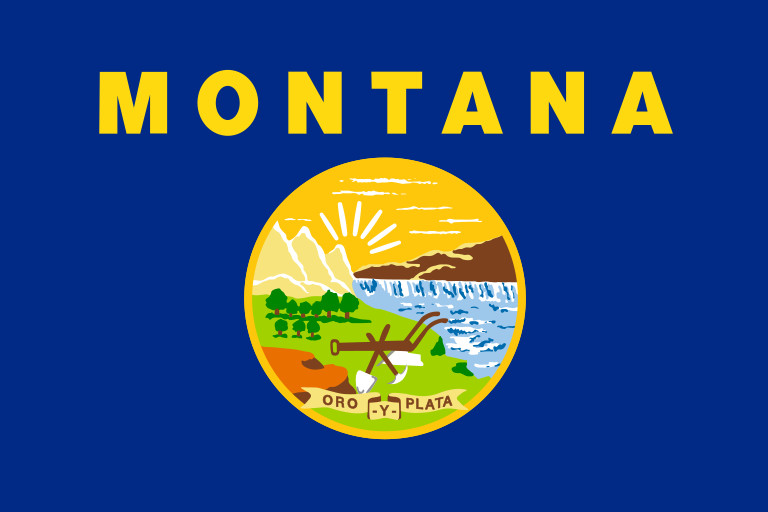
Quick Stats
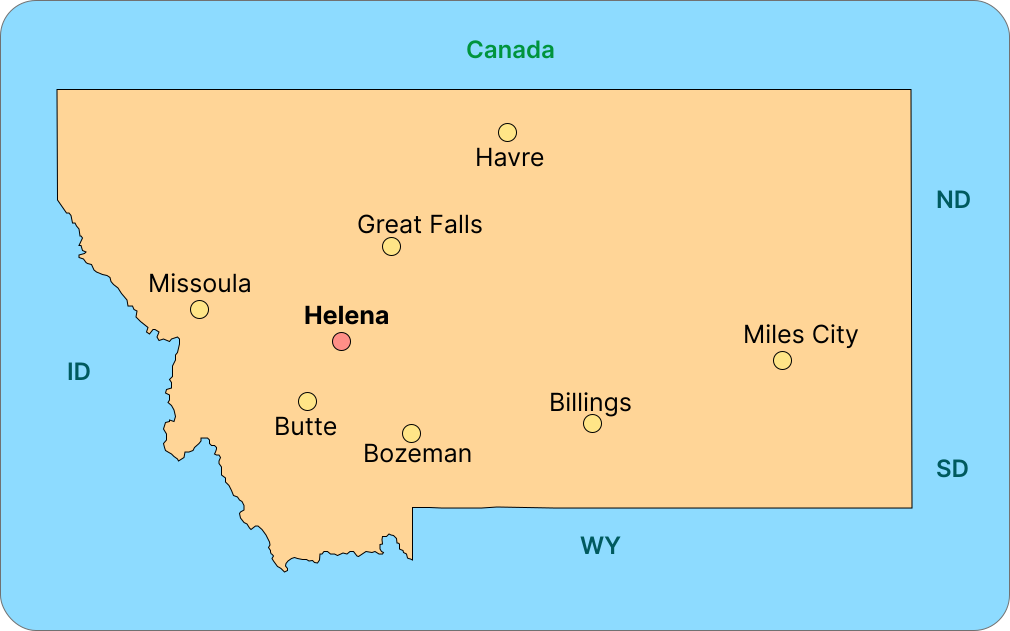
Map
Seal & Motto
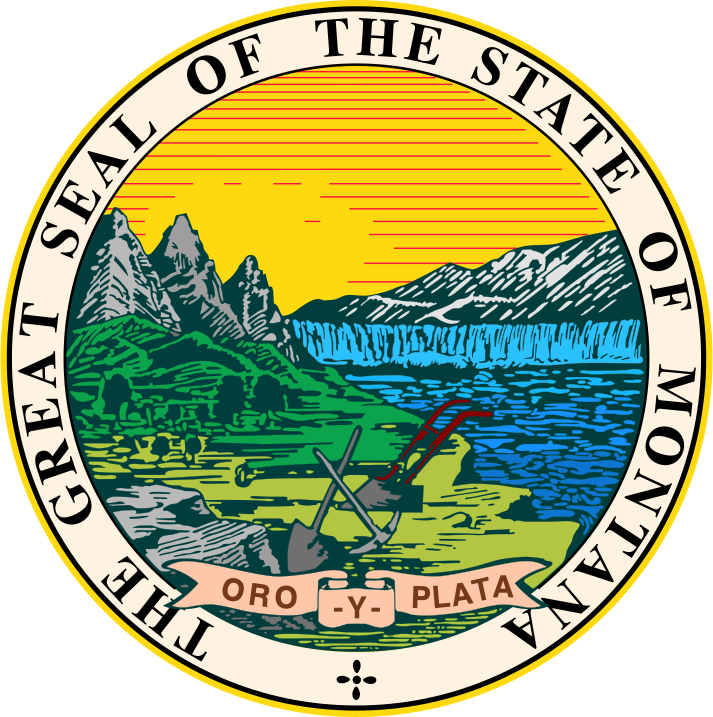
"Oro y Plata"
Additional Information
Population Growth
Overview
Montana, 'Big Sky Country,' captivates with its immense, seemingly endless landscapes and an unspoiled wilderness that inspires awe. Home to Glacier National Park and portions of Yellowstone, this fourth-largest state by area is a sanctuary for wildlife, world-class outdoor recreation, and a deep-rooted ranching and mining heritage.
Historical Significance
Montana officially joined the Union on November 8, 1889, as the 41st state. Its dramatic history spans from its role as a homeland for the Crow, Blackfeet, and Sioux nations, to the transformative 1860s gold and silver rushes, to the infamous Battle of Little Bighorn in 1876, which shaped the final chapter of the frontier era.
Top Cities & Hubs
Billings
Population: ~117,000The largest city in Montana and the regional economic hub for the entire northern Rocky Mountain region, a center for energy, healthcare, and agriculture serving a vast surrounding area.
Missoula
Population: ~75,000Home to the University of Montana, this vibrant liberal arts city nestled in five mountain valleys is a celebrated hub for outdoor adventure, literary culture, and environmental advocacy.
Great Falls
Population: ~60,000Situated on the Missouri River, this city is home to Malmstrom Air Force Base and Giant Springs State Park, where one of the largest freshwater springs in the world emerges.
Bozeman
Population: ~56,000One of the fastest-growing cities in the nation, a booming gateway to Yellowstone National Park and a rising tech hub attracting remote workers with its stunning mountain surroundings.
Butte
Population: ~35,000Historically known as "The Richest Hill on Earth" for its massive copper deposits, this historic mining city boasts a beautifully preserved National Historic Landmark District.
Key Landmarks & Economy
Did You Know?
- Montana has more cattle than people — the state's cattle population outnumbers its human population by a ratio of roughly 3 to 1.
- Glacier National Park straddles the Continental Divide, meaning rain falling on one side of the park flows to the Atlantic, while rain on the other side flows to the Pacific Ocean.
- The spectacular Going-to-the-Sun Road in Glacier National Park is one of the most dramatic highways ever built, crossing the Continental Divide at Logan Pass at 6,646 feet.